Manuscript structure
1. Types of contributions accepted
Géneroos magazine accepts academic and literary works that explicitly incorporate a gender and/or feminist perspective. Accepted contributions are:
a) Academic publications
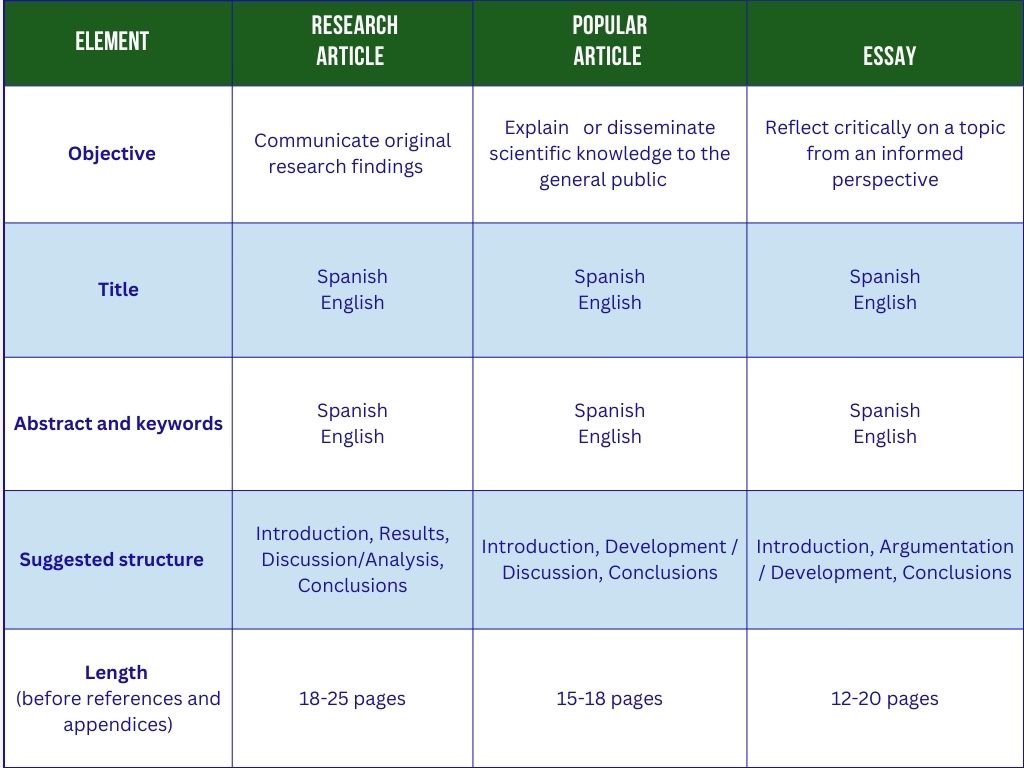
* Research articles. These present original results from theoretical and/or empirical research, aimed at the academic community specializing in gender studies.
* Popular science articles. These explain scientific, technical, or academic knowledge in language accessible to non-specialized audiences, with an emphasis on topics relevant to gender studies.
* Academic essays. These are argumentative texts that develop a critical, reflective, and well-founded analysis of a topic related to gender studies.
b) Literary and journalistic publications
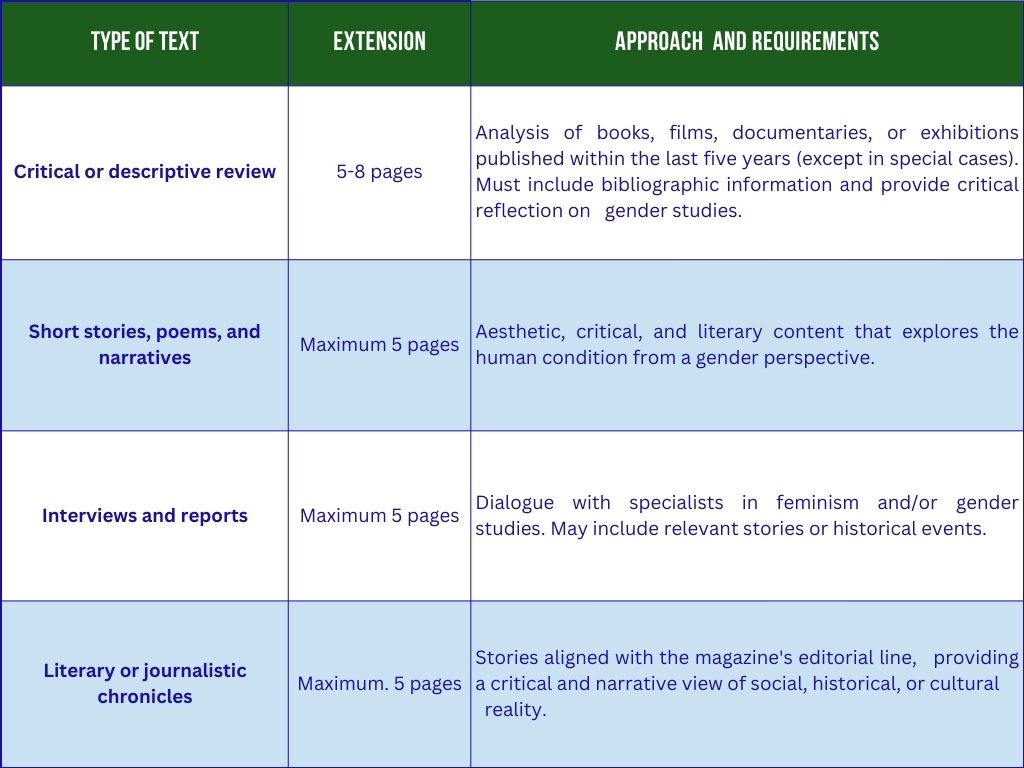
* Reviews. Critical or descriptive analysis of books, films, documentaries, exhibitions, or similar works from a gender perspective.
* Short stories and poems. Literary creations that explore the human experience from a gender perspective.
* Interviews. Dialogues with specialists, activists, artists, or relevant figures in gender studies.
* Chronicles. Journalistic or literary accounts of events, experiences, or social contexts from a feminist or gender perspective.
All materials will be subject to the review process established by the journal's editorial policy.
2. Formal requirements for manuscripts
Format
Word file (.doc or .docx).
Spacing: 1.5
Font: Times New Roman, 12 pts
Page size: Letter
Language: Spanish
Anonymization
The file must be sent completely anonymized, removing any reference to authorship:
Names
Acknowledgments
Projects or working groups
Self-citations that reveal identity
When necessary, place an X in the corresponding space.
“Instructions for anonymizing manuscripts”
Authorship data (only recorded in the letter of originality)
Full name(s) according to ORCID
ORCID
Handwritten or digital signature
Affiliated institution
Postal address
Telephone number
Email address
Highest academic degree and institution where it was obtained
Nationality
Lines of research or areas of work
Title . Maximum 10 words. In Spanish and English. Clear, concise, and related to the content
Abstract and keywords
For research articles, dissemination articles, and essays:
Abstract in Spanish (max. 250 words)
Abstract in English
Five keywords in both languages
The use of specialized thesauri is recommended:
Gender thesaurus: gender-equitable language (see here)
UNESCO thesaurus (see here)
3. Structure of academic publications
All texts in this section must include the following essential elements:
Comparative table
NOTE: In addition to the fundamental sections indicated for each type of text, authors may include other subheadings or additional sections as long as they are consistent with the overall structure of the text.
4. Structure of reviews and literary/journalistic texts
Comparative table